
What’s In This Guide
- How Are AI, Reviews, And Entity Signals Changing Local SEO?
- What Should Businesses Change First?
- How Do Structured Data And Entities Support Visibility?
- Where Do Reviews, Trust, And Accessibility Fit?
- How Can A Business Build A Future-Ready Content Process?
- How Should Businesses Prioritize The First 30 Days?
- What Metrics Should Show Whether The Strategy Is Working?
- Frequently Asked Questions (FAQs)
- Build a Stronger SEO Strategy With Charlotte Web Design
Local search is evolving as AI-powered search results become more sophisticated. Instead of relying primarily on keywords, search systems increasingly evaluate entities, reviews, structured data, and other trust signals to understand which businesses are most relevant for a local query.
Understanding these changes can help businesses strengthen their visibility, improve local rankings, and create content that serves both users and modern search engines.
Quick Facts
- AI search rewards clear answers, named entities, source-backed claims, and helpful structure.
- Google’s helpful content guidance still centers content around people-first usefulness, not search-engine shortcuts.
- Google structured data documentation can help search systems understand page meaning when markup matches visible content.
- Human review remains essential because AI tools can speed up work without understanding business goals on their own.
- The strongest strategy connects content quality, technical clarity, internal links, reviews, and conversion paths.
How Are AI, Reviews, And Entity Signals Changing Local SEO?
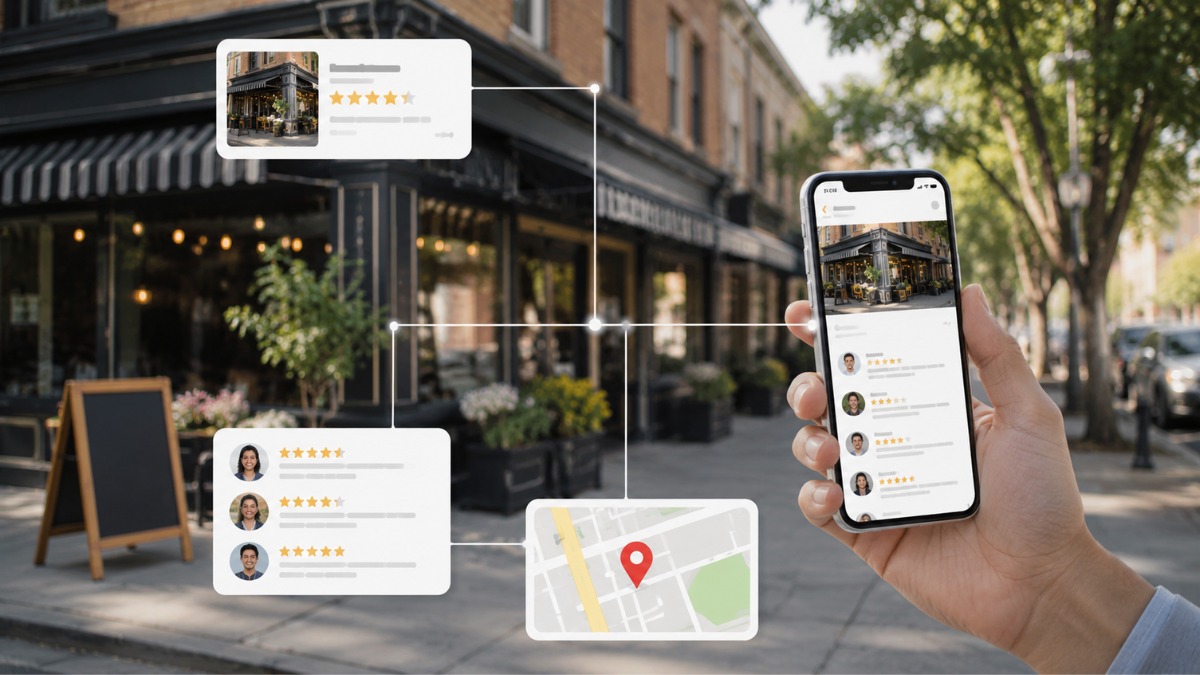
Local SEO is becoming more entity-driven. Search systems look for consistent business details, relevant service pages, strong reviews, local content, and signals that connect a business to a place, service, and audience.
As AI local SEO continues to evolve, search engines rely more heavily on these entity relationships to understand which businesses deserve greater visibility. The goal is not to chase every platform change. The goal is to make content easier to understand, verify, and act on.
What Should Businesses Change First?
The first improvement is usually structure. A page should answer the main question early, then support the answer with details, examples, proof, and next steps.
- Use one clear H1 that matches the search intent.
- Start major sections with short answer blocks.
- Add internal links to related services, case studies, or guides.
- Use descriptive labels for services, locations, industries, and audiences.
- Support claims with credible sources and firsthand business context.
Google’s helpful content guidance reinforces that useful content should show experience, expertise, and a clear purpose for readers.
How Do Structured Data And Entities Support Visibility?
Structured data helps search systems understand page context when markup accurately represents visible content. Entity SEO helps search systems connect a brand, service, location, author, and topic, making it easier for search engines and AI-powered results to understand how those elements relate.
The safest approach is to make the page itself clear first. Then use Google structured data documentation and Schema.org documentation to reinforce the visible facts on the page.
- Confirm the service, location, and audience are named clearly.
- Connect the page to related pages through internal links.
- Add FAQ, LocalBusiness, Article, Service, or VideoObject markup when relevant.
- Keep schema honest and aligned with the visible copy.
- Review important pages after major algorithm updates or significant AI search changes.
Where Do Reviews, Trust, And Accessibility Fit?

Trust signals make content easier to evaluate. Reviews, case studies, team expertise, author context, accessible design, and clear contact paths all help users decide whether to take the next step.
For local rankings, Google Business Profile local ranking guidance highlights relevance, distance, and prominence as important local ranking factors.
For website experience, W3C accessibility guidance gives a practical standard for making content more usable for more people.
- Keep business names, services, and locations consistent.
- Ask for detailed reviews that mention real services and outcomes.
- Use readable headings, alt text, captions, and accessible forms.
- Make phone, contact, and consultation paths easy to find.
How Can A Business Build A Future-Ready Content Process?
A future-ready process turns SEO, AI visibility, and conversion into one workflow. Every important page should answer a real buyer question, prove the business can help, and point to a clear next step.
- Group topics by service, location, funnel stage, and audience.
- Update older pages with direct answers and current examples.
- Add internal links from blogs to service pages and from service pages to supporting guides.
- Use analytics and Search Console data to find pages losing clicks or impressions.
- Review AI summaries manually to see whether the brand is represented accurately.
MORE ON THIS TOPIC: AI SEO in 2026: How to Rank in Google, ChatGPT, and AI Search Engines
How Should Businesses Prioritize The First 30 Days?
The first 30 days should focus on the pages and assets closest to revenue. A business does not need to rebuild every page at once. The better starting point is a short list of pages that already attract search interest or support sales conversations.
Review each page for search intent, answer clarity, proof, internal links, and conversion path. Then decide which updates will make the page more useful for a buyer and easier for search systems to understand.
- Update one service page that has commercial intent.
- Refresh one blog that answers a high-value buyer question.
- Add internal links between related service, blog, and contact pages.
- Improve one conversion path, such as a form, phone link, or consultation CTA.
What Metrics Should Show Whether The Strategy Is Working?

Good measurement connects visibility to action. Rankings and impressions matter, but the most useful reporting also watches clicks, engaged visits, form submissions, phone calls, assisted conversions, and qualified leads.
AI search can make measurement less direct because some users get answers before clicking. That makes content quality, brand mentions, review strength, and conversion-focused landing pages more important for local SEO trends as well as overall organic visibility.
Businesses should review performance monthly, then make focused updates instead of chasing every small search change. The right process compounds over time.
Frequently Asked Questions (FAQs)
Does AI search replace traditional SEO?
No. Traditional SEO still supports crawlability, relevance, links, content quality, and user experience. AI search adds more pressure to answer clearly and prove authority.
Should every page use schema?
No. Schema should be used when it accurately matches visible content and helps clarify the page. Forced markup can create quality problems.
How often should businesses update SEO content?
Important service and location pages should be reviewed at least a few times per year, especially when search behavior, services, or offers change.
How long does it take to see results from SEO?
SEO is a long-term strategy. While some technical improvements can have a faster impact, meaningful growth in rankings and organic traffic often takes several months, depending on competition, website history, and the scope of optimization.
Why is local SEO important for Charlotte businesses?
Local SEO helps businesses appear in searches from nearby customers looking for relevant products or services. Optimizing business profiles, location pages, local citations, and reviews can improve visibility in local search results and map listings.
Build a Stronger SEO Strategy With Charlotte Web Design
Whether you’re launching a new website, improving existing rankings, or adapting to AI-driven search, Charlotte Web Design helps turn your goals into a practical SEO plan. Every strategy is tailored to your business, target audience, competitive landscape, and long-term growth objectives.