
What’s in This Guide
- Charlotte Businesses Need an Integrated Discovery System
- How to Connect SEO, Maps, Content, Paid Media, and AI Search
- From AI Recommendation to Conversion
- Frequently Asked Questions
- Build the Website Foundation for Connected Marketing
Quick Facts
- Treat SEO, Maps, content, paid media, and AI visibility as one discovery system.
- Send every discovery touchpoint to a page built for the visitor’s location, intent, and next action.
- Use proof assets such as reviews, case studies, project examples, and expert content to reduce friction before conversion.
- Track visibility, engagement, leads, and conversions in one measurement framework.
- Optimize for AI search by strengthening the same fundamentals that support search visibility: crawlable pages, useful content, internal links, accurate business data, and structured information.
Charlotte Businesses Need an Integrated Discovery System
Charlotte is a large and growing local market. The U.S. Census Bureau estimated the city’s population at 964,784 in 2025, up 10.3% from the 2020 estimates base.
Growth creates opportunity, but it also means more businesses competing for attention across search, Google Maps, ads, and AI-assisted discovery.
The problem is not a lack of channels. It is fragmentation. A company may improve organic rankings, update its Google Business Profile, publish content, run paid campaigns, and pursue AI visibility, yet send prospects into disconnected experiences.
A stronger digital marketing strategy in Charlotte connects those touchpoints around one local customer journey. Google says local results are mainly based on relevance, distance, and prominence.
Google Search Central also says AI Overviews and AI Mode do not require special optimization beyond sound search fundamentals. Consistency across your website, Google Business Profile, content, and conversion paths matters more than chasing isolated tactics.
How to Connect SEO, Maps, Content, Paid Media, and AI Search
Define the Discovery Questions
List the high-intent questions a Charlotte customer asks before contacting you. Include service terms, location modifiers, comparison questions, pricing concerns, and trust questions. Use these themes across service pages, location pages, Google Business Profile content, paid landing pages, and educational content.
Build a Local Landing Path
A Google Maps result, organic listing, ad, or AI recommendation should lead to a page that quickly confirms what you offer, where you serve, and why the visitor should trust you. Avoid routing every prospect to a generic homepage.
Add Proof at the Decision Point
Place relevant reviews, project examples, credentials, FAQs, process details, or other proof near conversion actions. Match the proof to the page intent instead of hiding it on one separate testimonials page.
Make the Next Action Obvious
Use one primary conversion path, such as a quote request, consultation form, call, or booking. Keep forms focused and mobile-friendly. In Google Analytics, important actions can be marked as key events so you can evaluate the channels that contribute to them.
Re-Engage Non-Converters
Use remarketing, email, or other follow-up campaigns when appropriate. Continue the same intent. Someone who visited a Charlotte service page should receive a relevant follow-up, not a generic brand message.
From AI Recommendation to Conversion
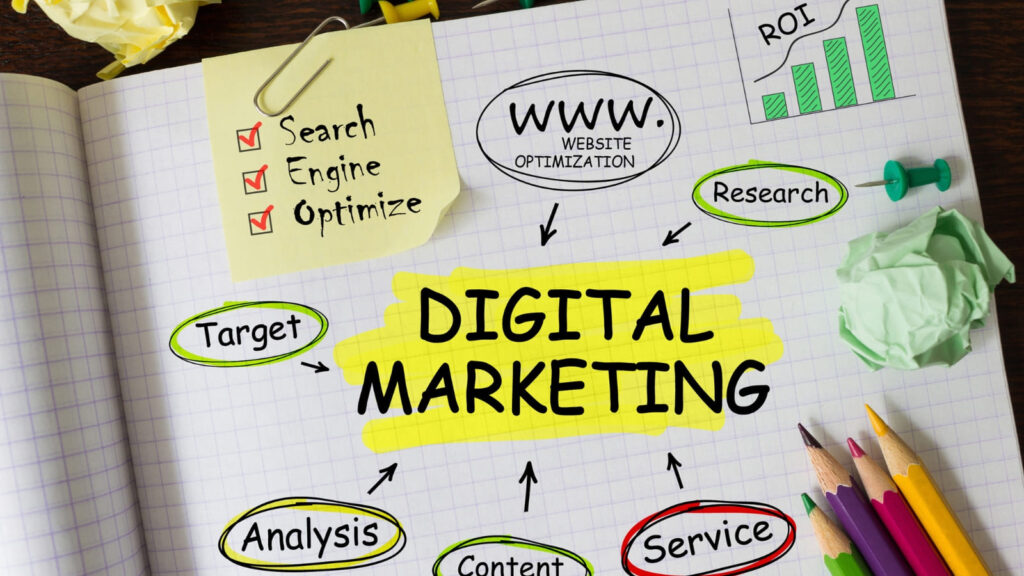
A connected local customer journey might look like this:
AI answer or Google Maps result → Charlotte service or location page → case study or review proof → focused conversion page → follow-up campaign.
AI optimization belongs inside this system, not beside it. Google recommends people-first content, crawlable internal links, accurate Google Business Profile information, and important content in visible text. Its current guidance also confirms that core SEO practices remain relevant to generative AI features.
For AEO and GEO, answer real questions directly, identify the business and service area clearly, and make important claims easy to verify.
How to Measure a Connected Digital Marketing Strategy
A connected digital marketing strategy should be measured across the full customer journey, not one channel at a time. Rankings, Maps visibility, ad clicks, content engagement, and AI referrals can all contribute to the same lead.
Track Visibility Across Channels
Monitor organic rankings, local search visibility, Google Business Profile activity, paid impressions, and AI referral or citation data where available. These metrics show where Charlotte prospects are discovering the business.
Measure Engagement and Lead Actions
Look beyond traffic to actions such as landing page engagement, calls, form submissions, quote requests, and other conversions. Consistent tracking makes it easier to see which touchpoints are contributing to meaningful activity.
Connect Marketing Activity to Business Outcomes
Where possible, connect website and campaign data with qualified leads, sales opportunities, and closed business. The goal is to understand whether SEO, Maps, content, paid media, and AI search are working together to move prospects from discovery to conversion.
Frequently Asked Questions
How often should Charlotte businesses review their digital marketing strategy?
Review performance at least quarterly, then adjust sooner when search behavior, offers, competition, or business goals change. A steady review cadence helps Charlotte businesses improve without overreacting to short-term fluctuations.
What should I look for in a Charlotte digital marketing agency?
Look for a team that connects website performance, local SEO, content, paid campaigns, and reporting around the same business goals. A Charlotte digital marketing agency should also explain how it measures qualified leads, not just traffic.
How long does digital marketing take to show results for a Charlotte business?
Timing depends on the channel, competition, website condition, and starting visibility. Paid campaigns can produce data quickly, while SEO and content usually need a longer evaluation window.
What digital marketing budget should a Charlotte business set?
Budget should reflect your goals, competition, service value, and the channels you plan to support. Start with a level you can measure consistently, then reallocate based on lead quality and cost.
Should Charlotte businesses use AI tools to create marketing content?
AI can support research, outlining, and production, but published content still needs human review for accuracy, brand voice, local relevance, and originality. Use AI to support expertise, not replace it.
Build the Website Foundation for Connected Marketing
Charlotte Web Design helps businesses create custom, SEO-friendly websites, content structures, and conversion paths designed around usability, visibility, and lead generation. If your current website does not connect local discovery to a clear next step, it may be time to rethink how your pages guide visitors from search to action.
Related Posts